
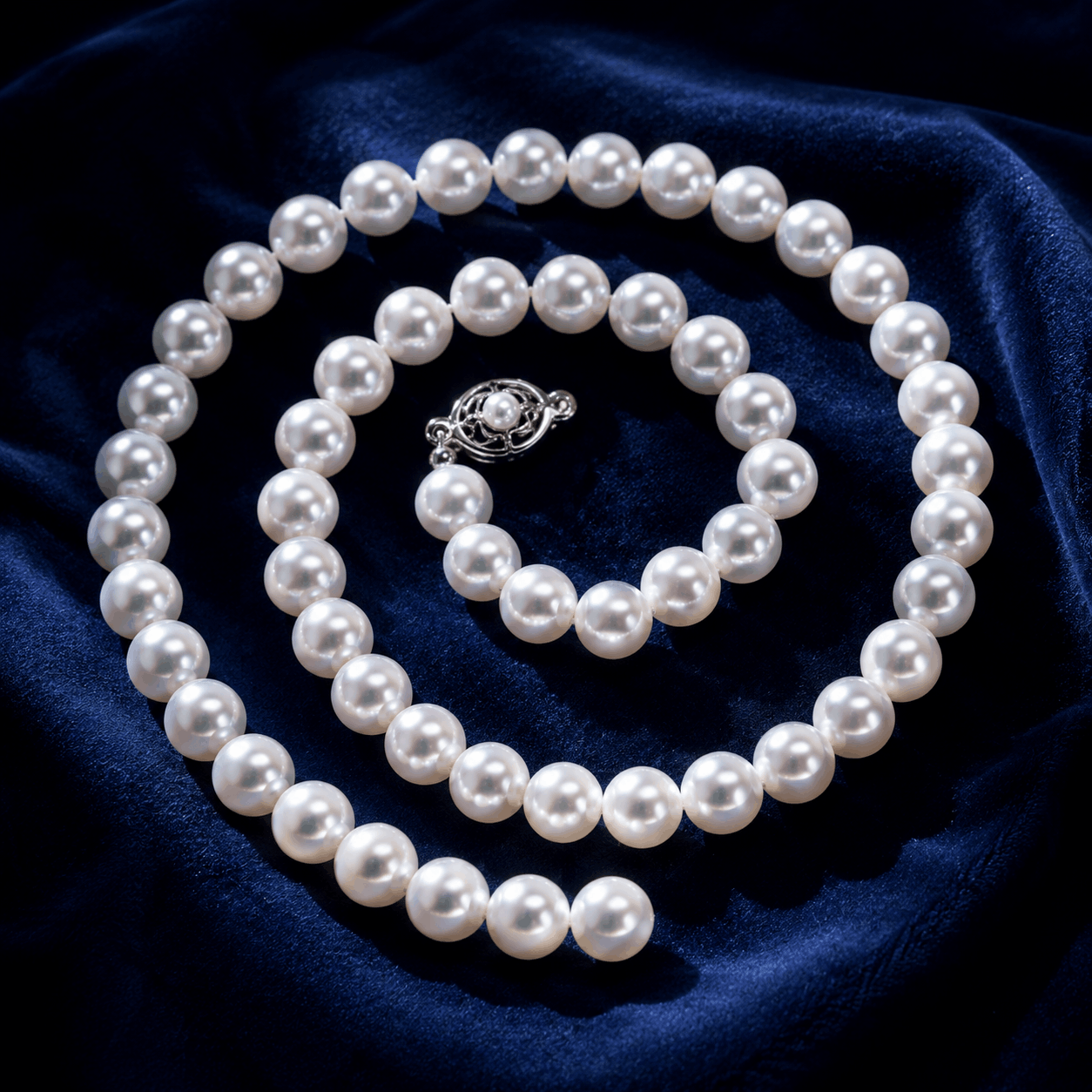
سألت صائغة مجوهرات مرة واحدة عن الفرق بين قلادة لؤلؤ بـ200 دولار وأخرى بـ2000 دولار. أمسكت بقلادة لؤلؤ أكويا من المياه المالحة من العرض وحملتها تحت الضوء. قالت: «ترى هذا؟ هذا ليس انعكاساً. هذا اللؤلؤ يتوهج.» كانت تلك اللحظة التي فهمت فيها ما تعنيه أكويا فعلاً في عالم اللؤلؤ. ليست مجرد اسم. بل فئة مختلفة تماماً من اللمعان والجودة والمتانة. لذا إذا كنت تحاول فهم ما هي قلادة اللؤلؤ أكويا من المياه المالحة فعلاً — وهل تستحق الدفع من أجلها — إليك الإجابة الصادقة.
ما الذي يميز قلادة اللؤلؤ أكويا من المياه المالحة
تنمو لآلئ أكويا في محار Pinctada fucata في الخلجان المالحة الباردة والصافية في اليابان — بشكل أساسي في محافظات مي، ناغاساكي وإهيمه. الماء البارد يبطئ عملية الأيض لدى المحار. وهذا الأيض البطيء ينتج طبقات نacre أكثر إحكاماً ودقة مقارنة ببيئات تربية اللؤلؤ في المياه الدافئة. النتيجة هي لمعان أكويا المميز — حاد، لامع، شبيه بالمرآة. النوع الذي يجعل قلادة اللؤلؤ تبدو شبه معدنية تحت الإضاءة المناسبة. لا يوجد نوع آخر من اللؤلؤ ينتج باستمرار هذا المستوى من البريق السطحي. لذا فإن قلادة اللؤلؤ أكويا من المياه المالحة ليست مجرد فئة تسويقية. إنها تميّز حقيقي في الجودة.

الحجم أصغر من لآلئ جنوب البحر — عادة من 6 مم إلى 9 مم، وتصل أحياناً إلى 10 مم في الحصادات الممتازة. لكن ما تفتقر إليه لآلئ أكويا في الحجم تعوضه بجودة السطح. الشكل المستدير المثالي واللمعان الاستثنائي يجعلانها الخيار الكلاسيكي لمجوهرات اللؤلؤ الرسمية. واللون الأبيض — عادة أبيض ناصع مع لمسات وردية أو فضية أو كريمية — يناسب تقريباً كل ألوان البشرة وكل الإطلالات. لذا تظل قلادات اللؤلؤ أكويا اليابانية الخيار الأكثر إطراءً عالمياً والأنسب للمناسبات الرسمية.
درجات جودة قلادة اللؤلؤ أكويا من المياه المالحة
ليس كل قلادات اللؤلؤ أكويا من المياه المالحة متساوية — وفهم التصنيف هو ما يفرق بين شراء جيد حقاً وبين خطأ مكلف. اللمعان هو كل شيء. هذا أول شيء يجب تقييمه. اللآلئ أكويا عالية الجودة تظهر انعكاسات حادة ولامعة مع تفاصيل واضحة على السطح. أما الدرجات الأقل فتبدو حليبية أو باهتة. لذا تحقق من اللمعان دائماً قبل الحجم، وقبل اللون، وقبل أي شيء آخر. لؤلؤة أصغر ذات لمعان استثنائي تفوز دائماً على لؤلؤة أكبر بلمعان متوسط.

تتراوح درجات جودة السطح من A إلى AAA أو AAAA حسب البائع. AAA تعني سطحاً شبه خالٍ من العيوب مع عيوب بسيطة تظهر فقط تحت الفحص الدقيق. AA بها عيوب طفيفة لكنها لا تزال تبدو جميلة حقاً. درجة A تظهر علامات سطحية واضحة تؤثر على المظهر العام والقيمة. ثم سمك الـnacre — العامل الذي يغفله معظم المشترين. النacre الرقيق يتقشر مع الوقت ويبهت اللمعان. النacre السميك يتعمق لمعانه مع الاستخدام. لذا اسأل دائماً عن سمك الـnacre عند شراء قلادة لؤلؤ أكويا مالح. البائعون الموثوقون يذكرونه بوضوح. أما البائعون الذين لا يستطيعون — أو لا يريدون — فهم يخبرونك بشيء مهم.
أكويا مقابل العذب مقابل جنوب البحر: أيها المناسب لك
إذن كيف تقارن قلادة اللؤلؤ أكويا المالح بأنواع اللؤلؤ الأخرى؟ أكويا مقابل العذب — تنمو اللآلئ العذبة في محار المياه العذبة في الصين. هي أكثر توفراً في السعر وتأتي بمجموعة أوسع من الأشكال والألوان. لكن حتى أعلى درجات اللآلئ العذبة لها لمعان أنعم وأدفأ من أكويا. لذا إذا كنت تريد ذلك اللمعان الحاد الشبيه بالمرآة، فأكويا هي الإجابة. العذب هو الخيار الذكي من حيث القيمة. أكويا هو الخيار الأول للجودة.

أكويا مقابل جنوب البحر — لآلئ جنوب البحر أكبر حجماً، ولها nacre أسمك وتحمل لمعاناً ساتانياً عميقاً مختلفاً تماماً عن بريق أكويا الحاد. تخيل أكويا كالبراق وجنوب البحر كالساتاني. كلاهما استثنائي. لكن لقلادة لؤلؤ كلاسيكية بالمعنى التقليدي — التي ستعرفها جدتك ويرتديها مدير تنفيذي في اجتماع مجلس الإدارة — فأكويا هي الإجابة النهائية. وأكويا مقابل تاهيتي — تقدم لآلئ تاهيتي ألواناً درامية داكنة بلون الطاووس لا تستطيع أكويا تقليدها. لذا إذا كنت تبحث عن اللون والدراما، اختر تاهيتي. أما للأناقة البيضاء الخالدة، فلا يوجد ما يضاهي قلادة لؤلؤ أكويا عالية الجودة.
دليل الأسعار للؤلؤ المالح
المستوى المبتدئ — 6 مم إلى 6.5 مم أكويا بجودة AA. توقع 300 إلى 600 دولار أمريكي لشِرْط طول أميري. جودة أكويا مالح حقيقية بسعر بداية مناسب. خيار جيد للاستخدام اليومي. الارتقاء إلى 7 مم إلى 7.5 مم بجودة AAA يرفع الأسعار إلى 800 إلى 2000 دولار أمريكي. هذه الفئة تقدم أفضل قيمة لقلادة لؤلؤ أكويا مالح — لمعان وجودة سطح تثير الإعجاب فعلاً، بأسعار يستطيع معظم المشترين تبريرها. ثم 8 مم إلى 8.5 مم AAA تبدأ من حوالي 2000 دولار وتصل إلى 5000 دولار أمريكي للشرائط المتطابقة جيداً. أما 9 مم فما فوق — نادرة في أكويا الأصلية — تبدأ الأسعار من 5000 دولار وتصل إلى 15000 دولار أمريكي للعينات الخالية من العيوب المتطابقة.

الآن، إذا رأيت «قلادة لؤلؤ أكويا مالح» بسعر أقل من 100 دولار أمريكي لشِرْط كامل، فهذا ليس أكويا. إما لآلئ عذبة مُسماة خطأً أو تقليد كامل. زراعة اللؤلؤ أكويا المالح الياباني الأصلي لها تكاليف إنتاج حقيقية تجعل الأسعار تحت 100 دولار مستحيلة للبائعين الصادقين. لذا فالسعر هنا مرشح جودة مفيد فعلاً — إذا بدا رخيصاً جداً ليكون أكويا حقيقياً، فهو غالباً ليس كذلك. اطلب دائماً الوثائق التي تؤكد الأصل الياباني المالح قبل الشراء.
كيف تشتري قلادة لؤلؤ أكويا مالح لن تندم عليها
ثلاثة أمور يجب التحقق منها قبل شراء أي قلادة لؤلؤ أكويا مالح. أولاً — وثائق المنشأ. اللآلئ أكويا الأصلية تأتي من اليابان. اطلب تأكيد المنشأ الياباني المالح. بعض البائعين يبيعون لآلئ عذبة صينية على أنها أكويا بنفس الأسعار. إنها ليست الشيء نفسه والفرق في اللمعان حقيقي وواضح مع الوقت. ثانياً — سمك الـnacre. اسأل تحديداً. يجب أن تكون الإجابة رقم — وليس فقط «سميك». أي شيء أقل من 0.35 مم يكون رقيقاً وسيظهر ذلك خلال بضع سنوات من الاستخدام المنتظم.

ثالثاً — سياسة الإرجاع. يقدم أي بائع لؤلؤ موثوق 30 يوماً على الأقل. في PearlsOnly، تأتي كل قلادة لؤلؤ أكويا مالح مع وثائق تصنيف كاملة، تأكيد المنشأ وضمان إرجاع 90 يوماً بدون أسئلة. لذا يمكنك تقييم الجودة بشكل صحيح في بيئتك الخاصة وإرجاعها بدون توتر إذا لم تلبِ توقعاتك. تصفح المجموعة الكاملة وابحث عن الشِرْط الذي يستحق ارتداءه كل يوم للعشرين سنة القادمة.
